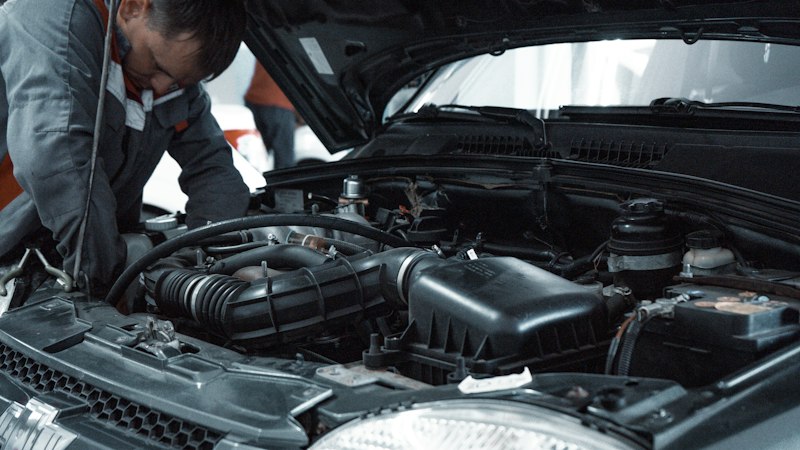
Automotive sealing parts — O-rings, oil seals, gaskets, bushings, dust boots, and grommets — may be small components, but they play an outsized role in vehicle reliability. Choosing the right material and supplier directly affects part lifespan and customer satisfaction.
Material Selection Guide
The four main rubber compounds used in automotive sealing parts each serve different applications:
| Material | Temperature Range | Key Properties | Common Applications |
|---|---|---|---|
| NBR (Nitrile) | -40°C to +120°C | Good oil and fuel resistance, economical | O-rings, oil seals, gaskets — general purpose |
| Silicone (VMQ) | -55°C to +230°C | Excellent high-temp resistance, flexible at low temp | Valve cover gaskets, turbo seals, high-temp boots |
| Viton/FKM | -20°C to +250°C | Superior fuel, oil, and chemical resistance | Fuel system O-rings, injector seals, chemical-duty gaskets |
| EPDM | -50°C to +150°C | Excellent weather, ozone, and water resistance | Door seals, weather strips, coolant system gaskets |
Hardness is measured on the Shore A scale. Most automotive sealing parts fall between 40 and 90 Shore A — softer for static seals that need to conform to surfaces, harder for dynamic applications like rotating shaft seals.
Manufacturing Processes
The molding process affects both part quality and cost:
- Compression molding: Simplest process — rubber compound is placed in a heated mold cavity and compressed. Good for simple shapes, lower tooling cost. Best for medium to large production runs.
- Injection molding: Rubber is injected into a closed mold under pressure. Better for complex geometries, tighter tolerances, and higher consistency. Higher tooling cost but lower per-part cost at volume.
- Transfer molding: A middle ground — rubber is pre-heated and forced into the mold cavity through channels. Good for parts with metal inserts.
What to Look for in a Sealing Parts Supplier
- Material compounding capability: A supplier who compounds rubber in-house can adjust formulations to your specific requirements — hardness, temperature resistance, color, and chemical compatibility.
- Material certification: Each batch should come with a certificate showing the compound’s actual properties (hardness, tensile strength, elongation, compression set).
- Custom mold development: If you need a specific part not in the supplier’s catalog, they should be able to develop a mold from your sample or drawing.
- Flexible MOQs: Look for suppliers who accept practical minimum orders — 1,000 pieces per size is reasonable for standard sealing parts.
- Sample availability: Before committing to bulk production, a supplier should provide samples for your evaluation and fitment testing.
Common Pitfalls in Sourcing
- Unspecified compound: Suppliers who just say “rubber” without specifying NBR, silicone, etc.
- No hardness specification: A part that’s too hard won’t seal; too soft won’t last
- Mixed batches: Inconsistent hardness or color across shipments indicates poor process control
- No dimensional reports: O-ring cross-section tolerance should be ±0.1mm or better
Sealing parts may not be the most glamorous product line, but they’re consistently in demand across every automotive market. Getting the quality right pays off in repeat business and fewer returns.